
The Estate Reform and Its Reception
Eugene OneginThis thread traces Eugene’s limited reform of peasant obligations and the neighbors’ hostile interpretation of his action.
increasing Bearing strength in each event
 decreasing
Bearing strength in each eventdecreasingA New Landowner
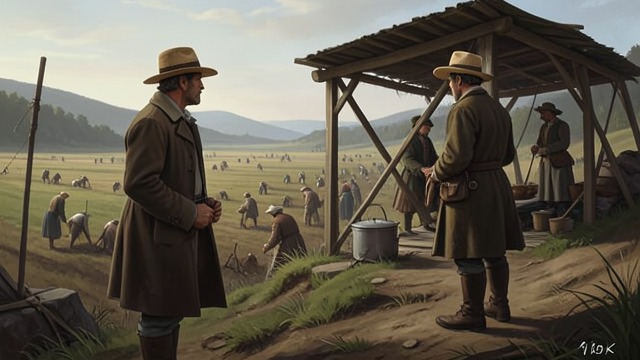
A New Landowner
Inherited authority
Eugene becomes the owner of land and dependent peasants after his uncle dies. The inheritance gives him power within a social order he has not chosen or studied deeply.
He begins by considering changes to the estate’s economic arrangements.
A practical experiment
His decision to replace compulsory labor with a different form of payment appears modest, but it affects the everyday terms of peasant life.
The episode shows that even a bored landowner can alter the conditions of others through inherited authority.
The Obligation Changes
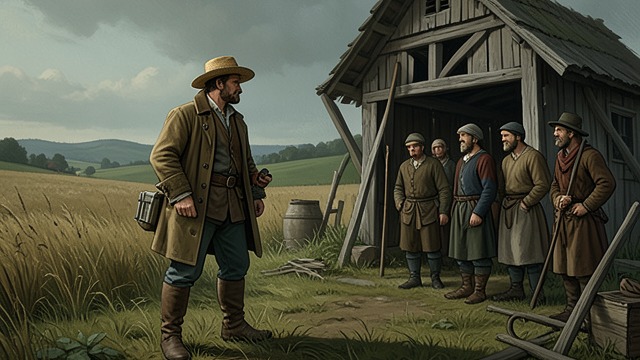
The Obligation Changes
A different arrangement
Eugene replaces the old labor obligation with an obrok arrangement. The peasants welcome the change as a relief from the former demand on their work.
The reform gives the estate a brief appearance of social improvement.
Narrow scope
The act does not make Eugene a sustained reformer. His interest in administration is limited, and the narrator presents the change as one local decision rather than a broad political program.
Its small scale underscores how entrenched the surrounding institution remains.
Neighbors Condemn the Change
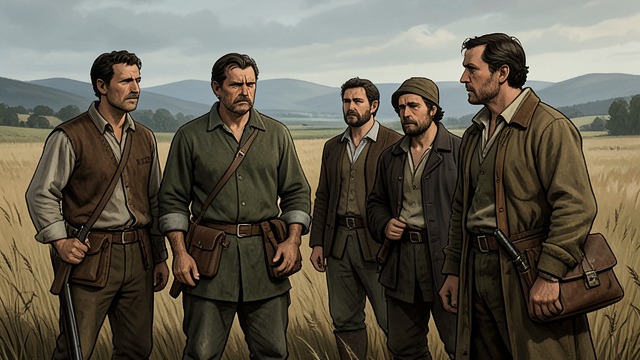
Neighbors Condemn the Change
Suspicion among landowners
Eugene’s neighbors regard his action as evidence that he is a dangerous fool. Their response reveals the social pressure to preserve customary arrangements.
Instead of asking whether the peasants benefit, they judge the reform by its departure from accepted practice.
Conformity over inquiry
The neighbors’ reaction helps explain why change is treated as a threat even when its immediate effect is favorable to the people subject to the old obligation.
The episode turns a practical adjustment into a small conflict between habit and reform.
The Estate Offers No Cure

The Estate Offers No Cure
A change of scenery
Eugene initially enjoys the estate’s meadows, woods, and streams, but quickly grows bored. The reform and the rural landscape fail to give him lasting purpose.
His restlessness is personal, yet it unfolds within an inherited social order.
A missed possibility
The property could have made sustained attention to land and people possible. Eugene instead treats his ownership as a temporary change of scenery.
The contrast between limited reform and deeper disengagement defines the narrowness of his intervention.
A Social Order Left Intact

A Social Order Left Intact
Reform without transformation
Eugene’s adjustment improves one local arrangement, but the estate remains part of a larger system of dependent labor and inherited privilege.
The neighbors’ conventional response outweighs any wider discussion of changing that system.
Structural limits
The poem offers no account of lasting reform after Eugene withdraws from rural life. The episode remains an isolated act rather than a political turning point.
Its importance lies in revealing both the possibility of small change and the force of social inertia.
shortly after Eugene inherits his uncle’s estate
during Eugene’s first period managing the estate
after the estate reform becomes known
after Eugene’s first days in the countryside
by the time Eugene departs the rural district
